EU-LI-PHE continues to support knowledge exchange and hands-on scientific collaboration across Europe through its Short-Term Scientific Missions (STSMs). Two recent missions undertaken by Giosué Vaccari and José Antonio Entrenas de León demonstrate how targeted mobility can bring together complementary expertise, strengthen methodological skills and create new opportunities for collaborative research in livestock phenomics.
Exploring the genetics of laying-hen behavior in Switzerland
Giosué Vaccari from Wageningen University & Research (WUR), a member of EU-LI-PHE Working Group 3 on Computational Resources and Methodologies for Data Analyses, completed an STSM at the Center for Proper Housing: Poultry and Rabbits, University of Bern, Switzerland, from 31 May to 20 June 2026, under the supervision of Dr. Mike Toscano, WG3 Leader.
The mission focused on laying the groundwork for the genetic analysis of a unique behavioral dataset collected from thousands of laying hens over more than a year. Working closely with researchers, technicians and bioinformaticians in Bern allowed Giosué to develop an in-depth understanding of the dataset and its complete analytical pipeline, while combining expertise in behavioural ecology with his own background in quantitative genetics.
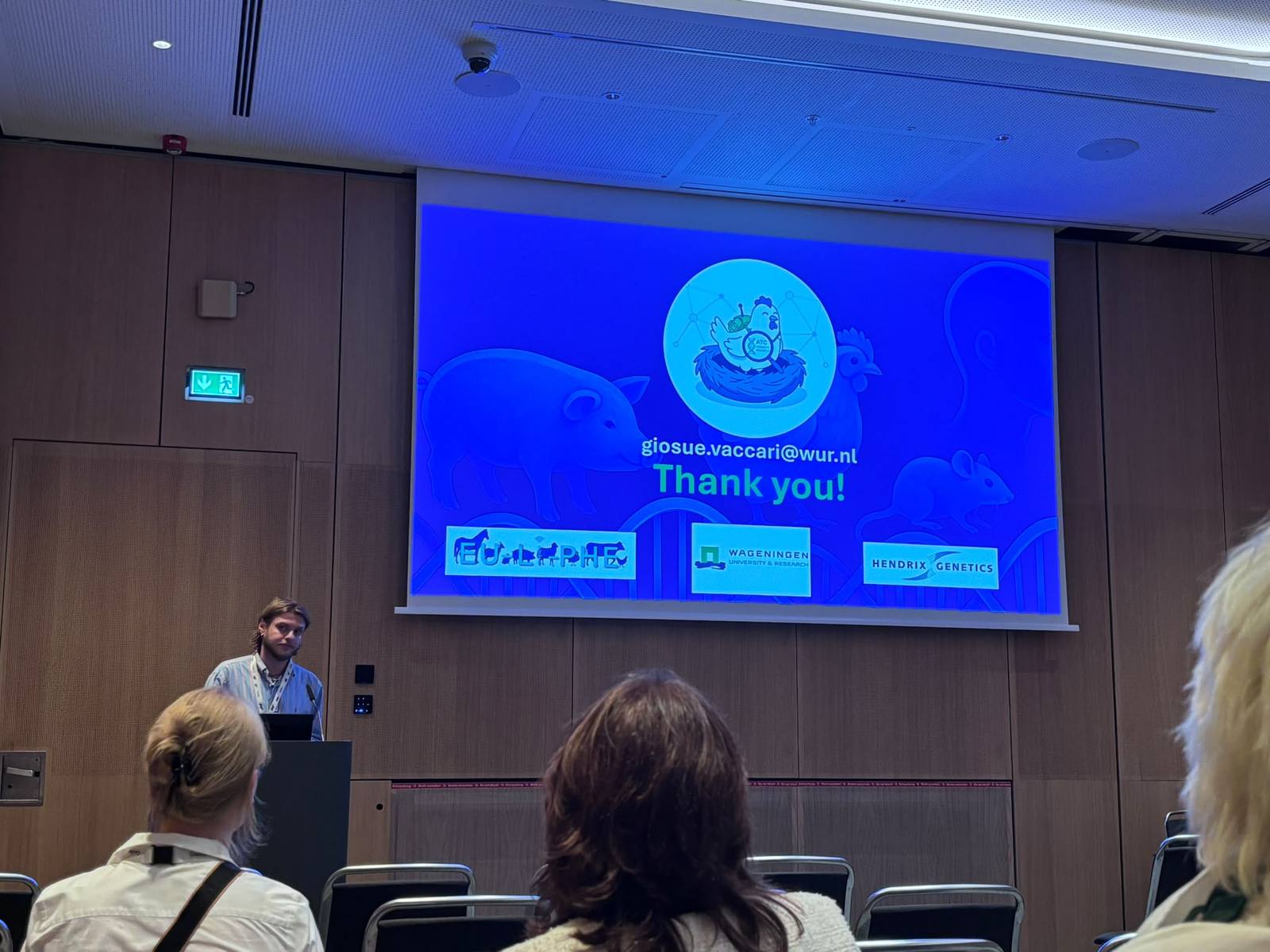
The visit also broadened his understanding of personality, behavioral plasticity and predictability, as well as welfare challenges such as keel bone fractures. Preliminary analyses were initiated during the STSM, and Giosué presented his project to the wider animal welfare and behaviour research community in Bern.
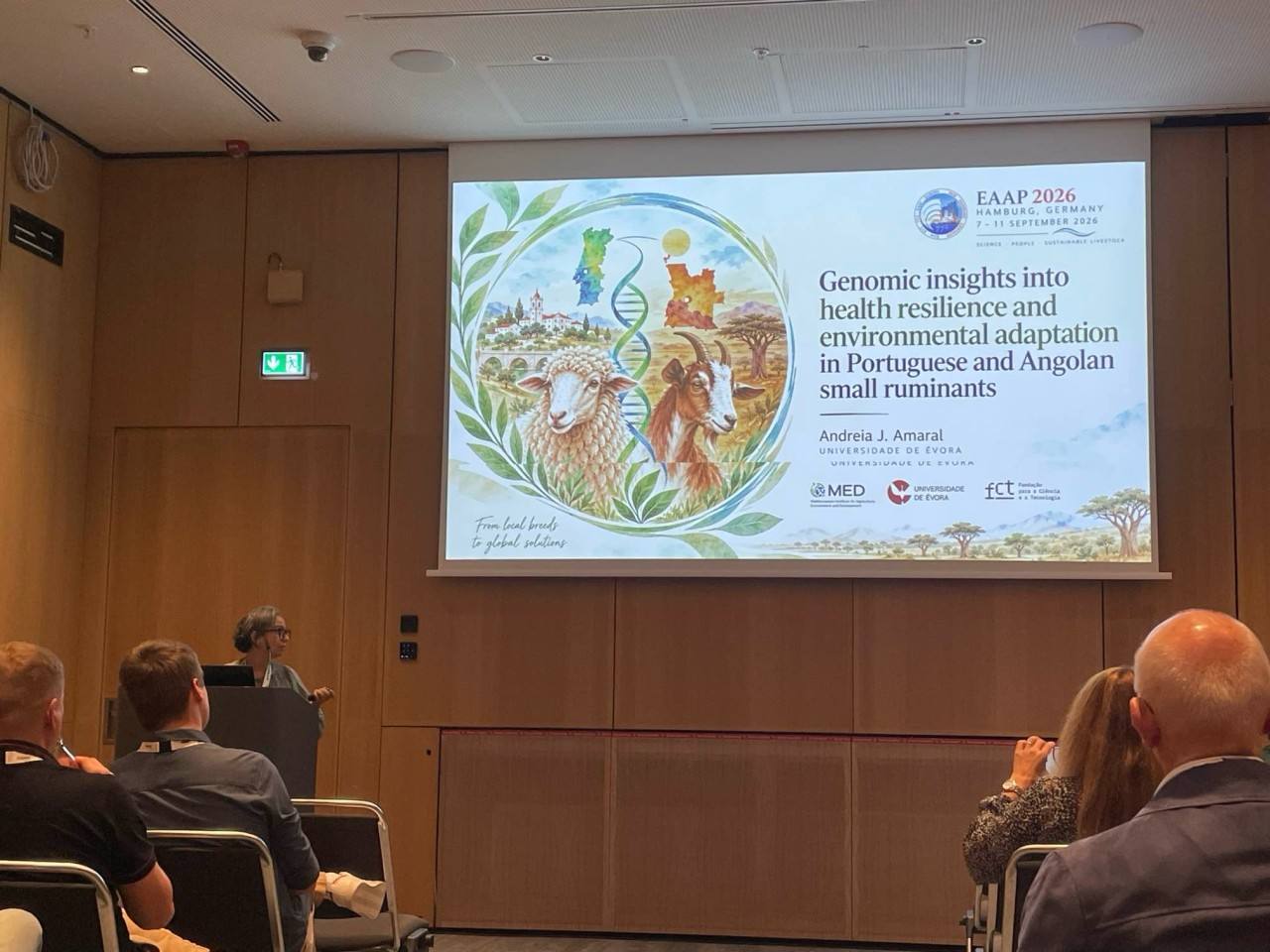
Importantly, the collaboration is already generating concrete outcomes: the teams are working towards the first genetic analysis of this behavioral dataset, at least one joint publication is expected, and a future research visit has been discussed. The first results were subsequently presented at the EAAP Annual Meeting in Hamburg, further extending the visibility of the work and EU-LI-PHE.
Combining spectroscopy and deep learning for milk phenotyping in Portugal
A second EU-LI-PHE STSM took José Antonio Entrenas de León from the University of Córdoba to the University of Algarve in Faro, Portugal, for a two-month research stay from 1 June to 31 July 2026. José is involved in both WG1 on Phenotyping Technologies and WG3 on Computational Resources and Methodologies for Data Analyses.
Under the supervision of Prof. Dário Passos, the mission aimed to develop practical expertise in deep learning for predicting milk composition from near-infrared (NIR) spectral data. José received theoretical and practical training in Python and deep-learning frameworks and developed and optimised convolutional neural networks (CNNs) using data collected through an automated milking system under commercial farm conditions.
The work covered data-quality assessment, spectral preprocessing and prediction of milk fat, protein and lactose concentrations. CNN performance was compared with conventional Partial Least Squares regression using an independent temporal validation set, allowing the research to examine both the potential and limitations of deep learning when confronted with instrumental drift and temporal variability.
Through the STSM, José was able to combine his existing expertise in NIR spectroscopy and chemometrics with new competencies in artificial intelligence. The mission also strengthened collaboration between the University of Córdoba, University of Algarve and KU Leuven, creating opportunities for future joint publications, conference presentations and research activities.
Although focused on very different phenotypes, both missions reflect the core ambition of EU-LI-PHE: connecting advanced phenotyping with computational and quantitative approaches while enabling researchers to learn directly from complementary expertise across the network.