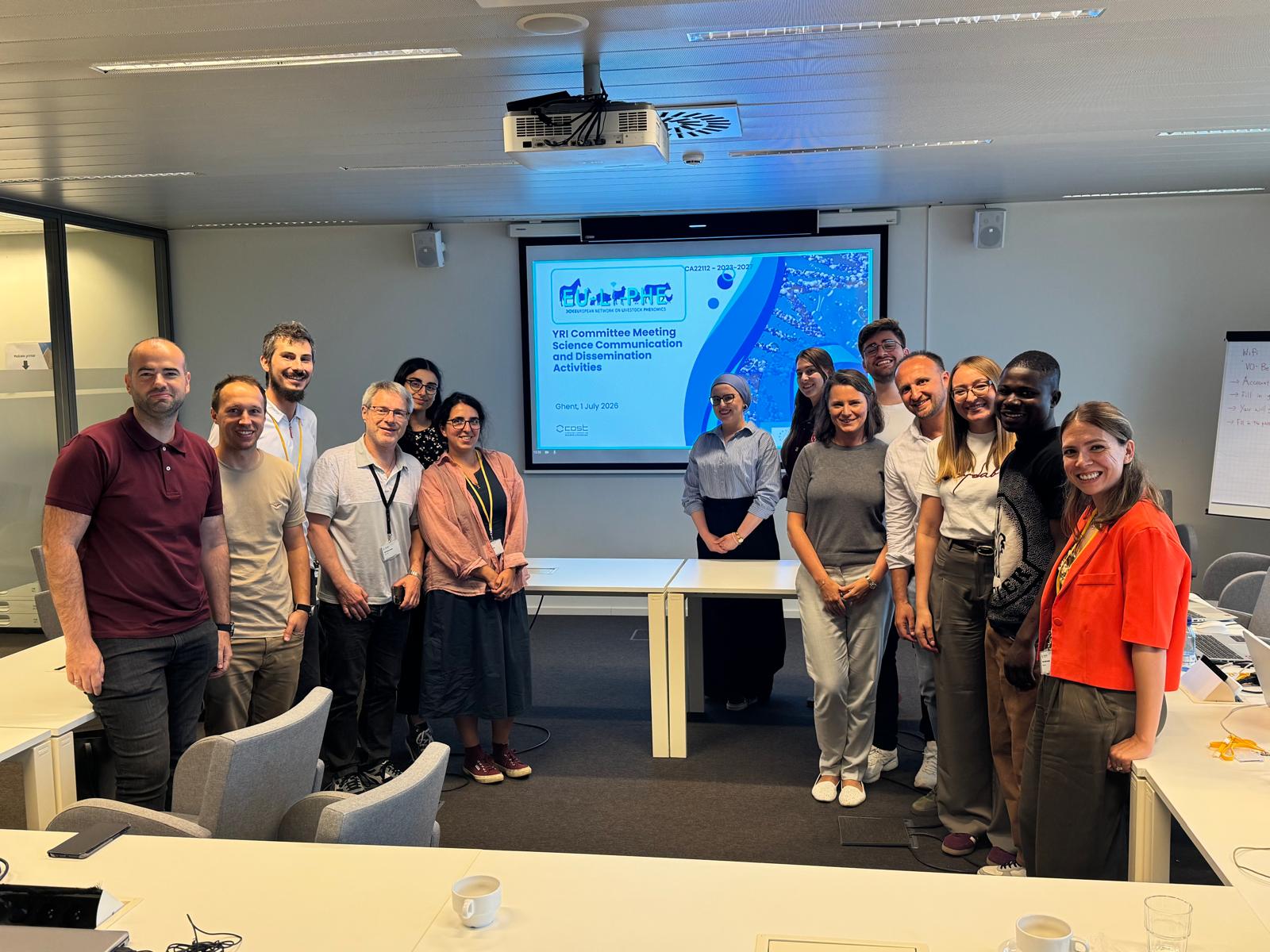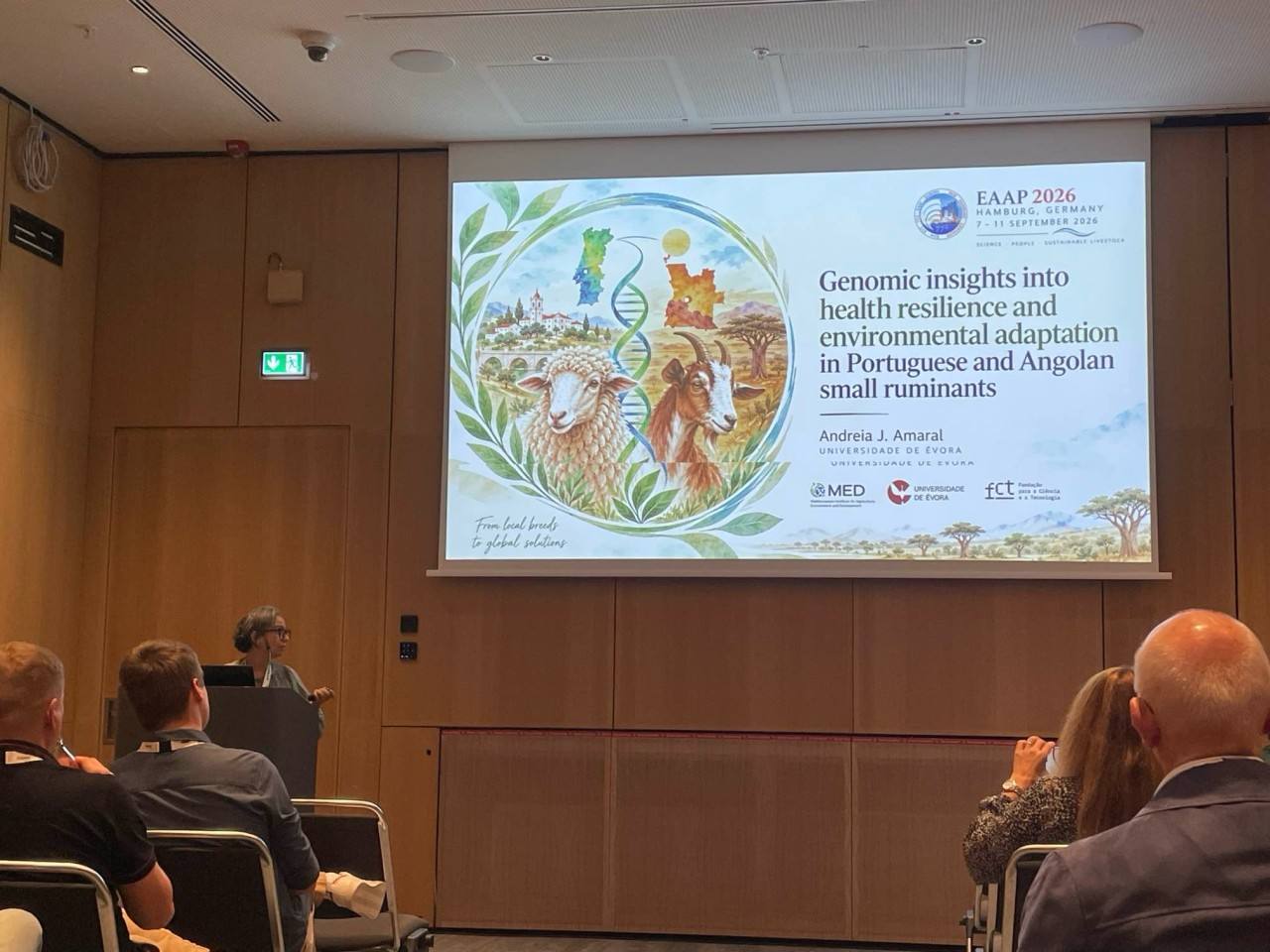
EU-LI-PHE supported Dr. Andreia Amaral from the University of Évora, Deputy Leader of Working Group 2, through an ICT Conference Grant to participate in the 77th Annual Meeting of the European Federation of Animal Science (EAAP), held in Hamburg, Germany, from 7–11 September 2026.
During the conference, Andreia delivered an oral presentation in Session 40 on small ruminant genetics and genomics, entitled “Genomic insights into health resilience and environmental adaptation in Portuguese and Angolan small ruminants.” Her work combined a genome-wide association study investigating parasite resilience in Portuguese Merino sheep with the first whole-genome characterisation of native Angolan sheep and goats. The research directly addresses one of the key challenges at the heart of EU-LI-PHE: improving phenotyping approaches to unlock the full potential of livestock genomics.
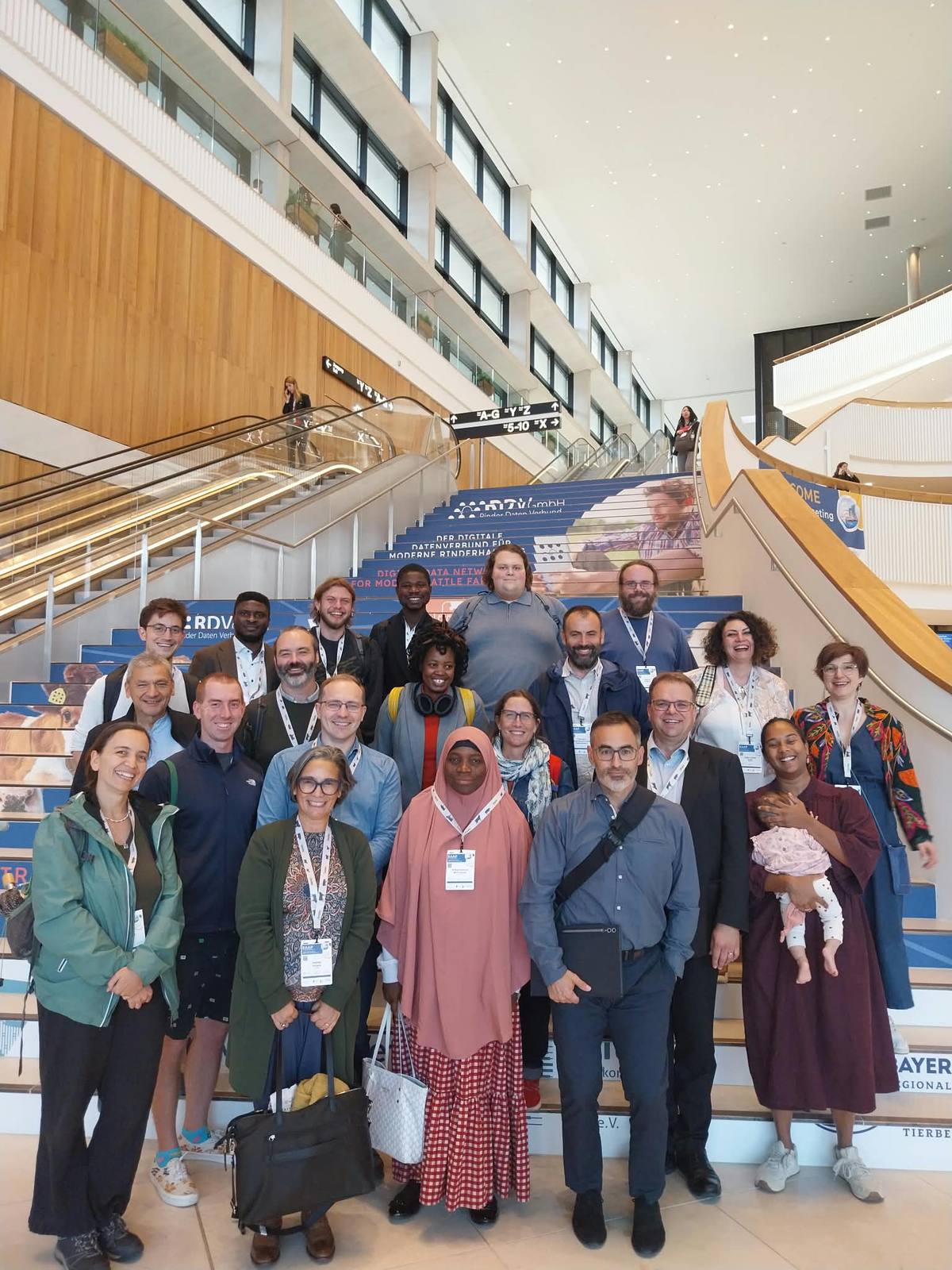
EU-LI-PHE’s support enabled Amaral to present these results to the international animal-science community while positioning the research within a broader European discussion on livestock phenomics. Her involvement in Hamburg extended beyond scientific presentation, as she also contributed to the organisation, delivery and reporting of the EU-LI-PHE workshop held alongside the meeting.
The activity also generated concrete opportunities for new international collaboration. Discussions during the meeting opened pathways towards the co-supervision of a PhD student in cattle genomics with Prof. Nicolò Macciotta from the University of Sassari, as well as joint research with Dr. Wendy Rauw from INIA-CSIC on resilience phenotypes within a Portuguese local chicken conservation programme. These collaborations broaden the scope of Amaral’s research across species and national boundaries.
By supporting the participation of its researchers in major international scientific events, EU-LI-PHE continues to strengthen knowledge exchange, scientific networking and collaboration across the European livestock phenomics community, while helping translate advances in phenotyping into new research partnerships and applications.