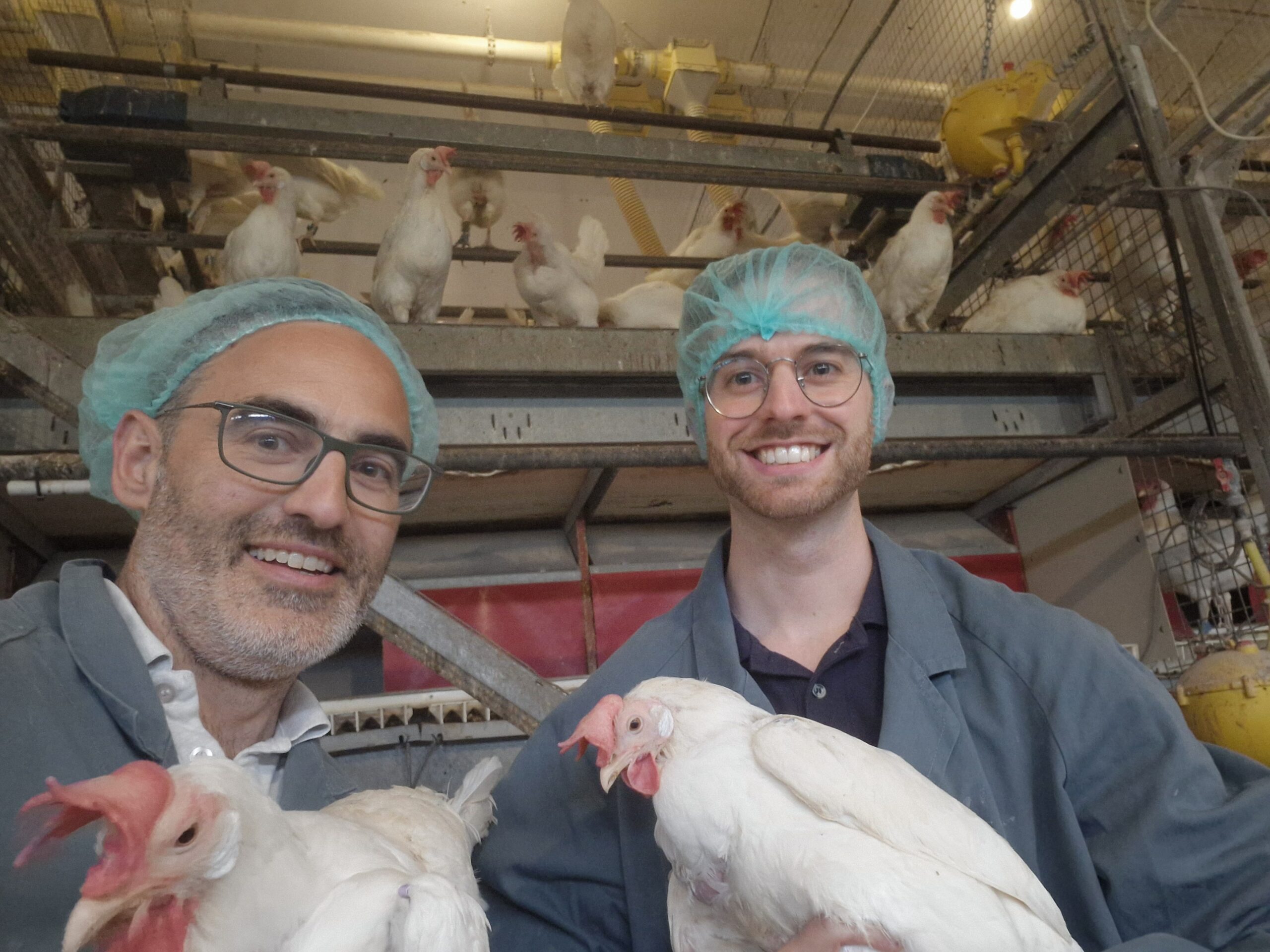
Matthias Corion from KU Leuven, a member of EU-LI-PHE, recently completed an STSM at the University of Bern. Hosted by the Center for Proper Housing: Poultry and Rabbits (ZTHZ) research group, the mission took place from 30 April to 8 May 2026 and focused on understanding the biological mechanisms underlying behavioural differences in laying hens.
A key question guided the research: Why do some laying hens actively explore the litter area while others spend most of their time on the upper tiers of an aviary system?
Working closely with Dr. Michael Toscano and colleagues, Matthias investigated laying hens housed in a multi-tier aviary system equipped with RFID tracking technology. This advanced system enabled researchers to monitor individual movement patterns and identify birds exhibiting contrasting spatial behaviours, particularly hens with either high or low use of the litter area. The core activity of the STSM involved collecting biological samples, including cecum content, blood plasma, and brain tissue, using standardised procedures. These samples will now be analysed through microbiome and metabolomics approaches to investigate potential links between gut microbial communities, microbial metabolites, and behavioural phenotypes. The research aims to determine whether the gut–blood–brain axis plays a role in shaping individual behavioural differences in laying hens, contributing to a deeper understanding of animal behaviour and welfare.
The mission highlighted the value of interdisciplinary collaboration within the EU-LI-PHE network by bringing together complementary expertise from KU Leuven and the University of Bern. Beyond generating valuable scientific data, the exchange allowed Matthias to expand his research focus from metabolomics towards behavioural phenotyping and integrated livestock phenomics.
Reflecting on the experience, Matthias emphasized that the STSM strengthened his international research network within the EU-LI-PHE community and laid the groundwork for future collaborations, joint analyses, dissemination activities, and scientific publications.
EU-LI-PHE is pleased to support research exchanges that foster innovation, strengthen scientific cooperation, and advance our understanding of livestock phenomics through multidisciplinary approaches.